Season by season
January–February
Quiet winter weather; suitable for walking the old town, but beach businesses and some seasonal operations run reduced hours or close.
The coast is not at its most useful, and dispersed sights are harder to enjoy without a car or flexible plans.
March–April
A shoulder season for countryside and historic-centre exploring, generally before summer heat and beach crowds arrive.
Weather can still be variable, and seasonal beach facilities may not yet be fully operating.
May–early June
One of the most sensible windows: warm enough for coast and countryside without high-summer heat or August-level pressure on roads and accommodation.
Popular weekends can still be busy; this is not guaranteed empty-season travel.
Mid-June
Warm and lively, with La Scamiciata and Fasano Jazz bringing activity into the centre.
Expect more people, more difficult parking and less of the quiet-lanes experience.
Late June–August
High summer: hot inland days, often above 30°C, busy beaches, full masserie and slower roads. August is the peak-pressure month.
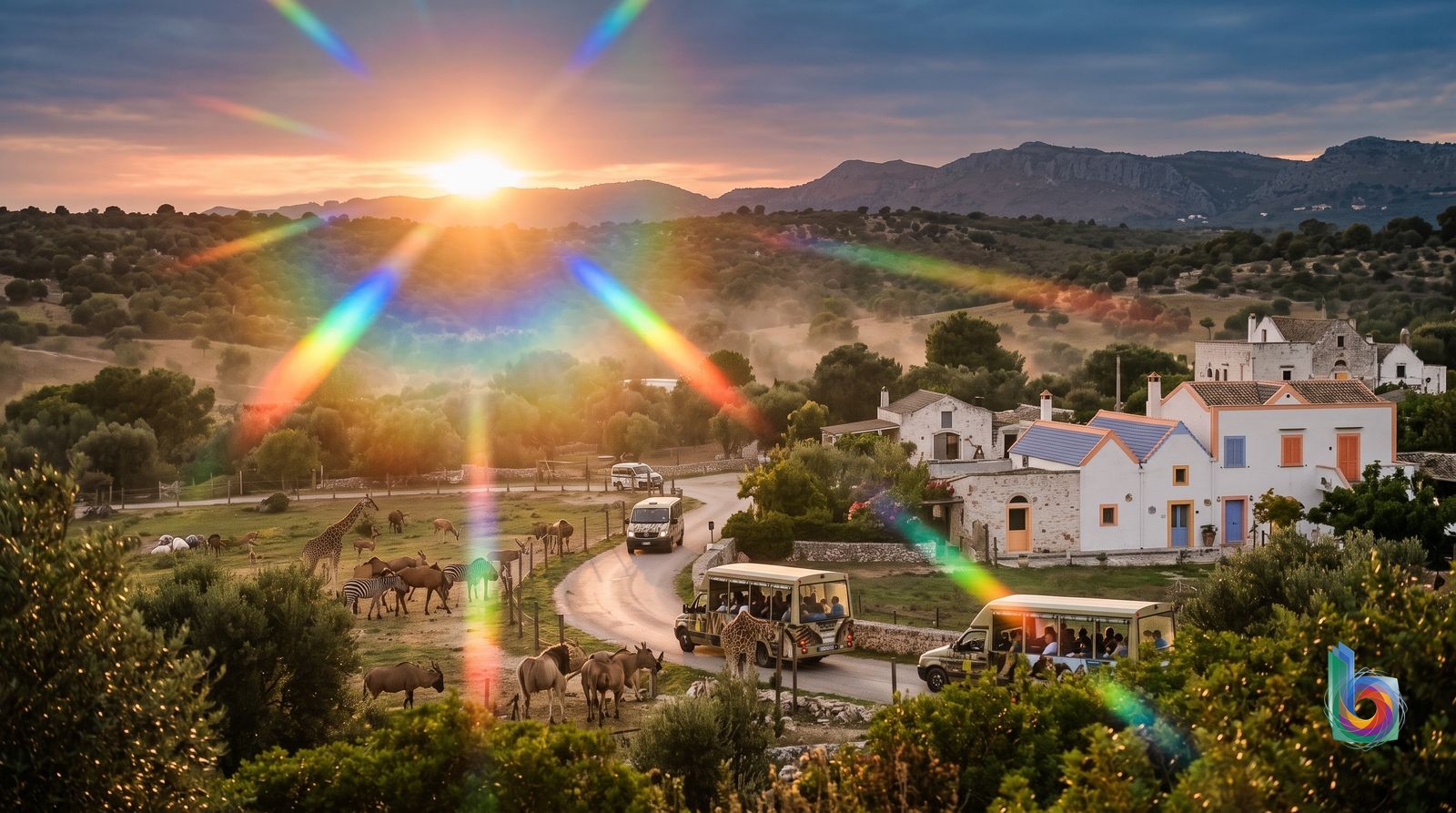
Book accommodation, restaurants, beach clubs and Zoosafari ahead. Coastal parking is difficult, and the August Fasano–Selva hill-climb can disrupt local movement.
September–October
A second excellent shoulder season: still warm enough for coast and countryside, with less punishing heat and generally lighter crowds than July–August.
Beach businesses may begin reducing hours later in the period, so check individual lidos and seasonal services.
Events worth planning around
La Scamiciata · Mid-June
A major centre-focused event that makes Fasano livelier and more crowded; choose it for atmosphere, but expect harder parking and less quiet in the old town.
Fasano Jazz · Mid-June
Runs around the same lively June period and adds demand for evenings in town; reserve accommodation and dinner rather than relying on last-minute availability.
Fasano–Selva hill-climb · Usually August
The motorsport event disrupts movement locally. Avoid scheduling tight driving transfers around Fasano and Selva di Fasano, or go specifically for the event and plan around closures and traffic.
Stella sulla grotta and the Monte Rivolta Epiphany nativity · Christmas period through Epiphany
These seasonal religious displays give winter visitors a specific reason to come, but do not change the wider reality of reduced beach and seasonal-business hours.
Getting around
Walking
Fasano Centro Storico: Piazza Ciaia and the white lanes of U'mbracchie are best explored on foot; allow two or three unhurried hours. Savelletri’s small harbor and Torre Canne’s resort strip are also walkable once you are there.
Park outside Fasano’s signed ZTL and walk in. In Savelletri and Torre Canne, use walking for waterfront dinners, beaches and the immediate centre—not as a way of linking settlements.
Walking stops working between districts: Fasano station is outside the historic centre; Egnazia, Zoosafari, Savelletri, Torre Canne and most masserie are not a walkable cluster. Selva di Fasano’s hills, scattered lodging and roads make casual walking particularly poor.
Rental car
The clear best choice for coast-and-countryside stays: Savelletri, Borgo Egnazia and the San Domenico coast, Egnazia Archaeological Park, Selva di Fasano, Pezze di Greco, Montalbano, Pozzo Faceto and rural masserie. It also makes Valle d'Itria excursions realistic.
Rent at Bari or Brindisi airport, or arrange one before arriving if your accommodation is outside Fasano town. Use it to connect a Fasano-centre base with beaches, Egnazia and the hills; keep it parked when exploring the old town.
Do not drive into the centro storico ZTL or trust navigation blindly in its narrow lanes. Summer coastal parking is a real problem, and August brings busy roads; the Fasano–Selva hill-climb can disrupt local movement. Rural stays also mean dark-country-road driving after dinner.
Regional train
Useful for arriving from Bari or Brindisi and for rail-based stays in Fasano Centro Storico or Torre Canne. Fasano station is on the Bari–Brindisi–Lecce main line; Torre Canne also has a stop on the Adriatic route.
Use Trenitalia regional services, then plan the last leg in advance. From Fasano station, walk only if travelling light and staying in town; otherwise arrange a taxi, hotel pickup or car. From Torre Canne station, expect a transfer to the beach resort.
A rail stop does not solve local mobility. Fasano station is outside the old town, while Savelletri, Egnazia, Selva di Fasano, Borgo Egnazia and the masserie have no useful rail base. Do not assume taxis will be waiting after every train.
Taxi or pre-booked transfer
The sensible last-mile option from Fasano or Torre Canne station, airport arrivals without a rental car, dinner transfers from a masseria, and short hops where parking is awkward—especially Savelletri or Egnazia.
Book through your hotel, masseria or a local provider before arrival, particularly for station pickups and evening returns. Resort transport can be the practical substitute for a car on the Borgo Egnazia and San Domenico coast.
Taxis are limited and rideshare is not dependable. They are not a good-value all-day sightseeing strategy for the dispersed municipality, and late-night availability is especially risky outside Fasano centre and the main summer coastal areas.
Local bus
A backup for a specific local connection, rather than a visitor’s main sightseeing plan. It can help if timings happen to match a journey from Fasano town.
Check current timetables locally and build in slack; treat it as a point-to-point service, not a hop-on network. Have a taxi or hotel-transfer fallback for luggage and evening travel.
Services are thin outside school and commuter patterns, making spontaneous sightseeing unreliable. It works poorly for Selva di Fasano’s hills, rural masserie, the Borgo Egnazia/San Domenico coast, Egnazia and inter-district beach hopping; late-night service should not be assumed.
Safety: Fasano is generally low-key, but keep valuables out of sight in parked cars—especially at isolated coastal and archaeological-site lots—and never drive into the signed ZTL of the old town, where cameras can trigger costly fines.
Book before you land
Zoosafari Fasano / Fasanolandia — book online a few days ahead for summer weekends, Italian school holidays and August, particularly if you want a specific arrival time. It is the one mainstream Fasano attraction for which turning up at peak time can mean a poor queue or no convenient entry. · No other core sight is a serious advance-booking problem in normal conditions: the Egnazia archaeological park and National Archaeological Museum are usually better checked for current hours than pre-booked weeks ahead. Reserve restaurants, beach clubs, golf and thermal treatments separately in summer; they are the real availability pinch points, not museum tickets.
- Fasano is not one compact resort. Confirm the exact address before booking: “Fasano” accommodation may be in the town, in hilly Selva di Fasano, or several kilometres away on the Savelletri/Torre Canne coast.
- Carry a card, but keep some cash for small bars, parking machines and occasional rural businesses. Ask for the receipt—“scontrino”—and retain it until you leave the premises.
- Respect ZTL signs in the historic centre. A camera-issued driving fine is a very expensive souvenir, and the old streets are genuinely too narrow for casual driving.
- Beach access is a mix of free shoreline and paid lido concessions. Free does not mean serviced: bring water, shade and footwear for rocky stretches, and reserve a lido or arrive early in July–August.
- Dinner runs late by northern-European standards; a serious restaurant meal before 19:30 can be difficult outside tourist-facing hotels. Book ahead on summer weekends rather than relying on a walk-in.
- Petty crime is not the defining travel problem here, but do not leave bags or beach gear visible in a parked car—especially at isolated coastal and archaeological-site parking areas.
Worth leaving the city for
Alberobello and LocorotondoFull day — roughly 7–9 hours door-to-door. By car, allow about 40–50 minutes each way to Alberobello; public-transport connections are possible but not a clean, fast direct hop, so do not attempt both towns on a tight schedule.
This is the essential inland escape: Alberobello delivers the trulli spectacle, while nearby Locorotondo supplies the whitewashed, lived-in hill town that Alberobello can lack at midday. Together they are a better use of a full day than trying to stretch Fasano’s compact centre beyond its natural limits. The downside: Alberobello is heavily touristed and feels stage-set in peak season; go early, then spend the longer lunch and late afternoon in Locorotondo.
OstuniMost of a day — about 6–8 hours door-to-door. Fasano has regional rail links toward Brindisi/Lecce, but allow extra time and a local bus or taxi from Ostuni station uphill to the centro storico.
Ostuni’s hilltop old town is more dramatic and more visually coherent than Fasano’s: a dense white city with real verticality, views and enough lanes to wander for hours. It is the right choice for travelers who want an actual town day rather than another attraction-driven day. The honest catch is that it is crowded in summer and its steep, polished streets are tiring; the rail station is also below the old town, not at its gate.
Monopoli and Polignano a MareFull day — around 7–9 hours door-to-door, including getting from Fasano town to its station. Both towns sit on the Bari–Brindisi rail corridor, making this one of the least car-dependent outings from Fasano.
For an Adriatic day with more atmosphere than Fasano’s dispersed coast, pair Monopoli’s working harbour and substantial old town with Polignano a Mare’s cliff-edge lanes and sea views. Monopoli is the better place to linger; Polignano is the photogenic stop that can feel swamped by day-trippers. This beats a second central-Fasano day if you want walkable coastal urbanism rather than beaches or resorts.
MateraVery full day — approximately 10–12 hours door-to-door by car, longer and less straightforward by public transport. Plan an early start and do not combine it with Alberobello on the same day.
Matera is the one long-haul detour that can justify itself: the Sassi cave districts are unlike anything in Fasano or coastal Puglia. Go only if you have enough time to let it be a long day, preferably with a car; rushing there and back by public transport turns a remarkable place into a transport exercise. It beats another Fasano day for first-time visitors, but not at the cost of losing Egnazia if archaeology is your priority.