- Pace
- Use one hotel base; moving hotels to cover Gangnam or Jamsil wastes more time than it saves. A first visit needs 4–6 full days, or 7–8 if you want museums, hiking, nightlife and unhurried food exploration. Central districts are commonly 25–45 minutes apart, and cross-city journeys can take 60–90 minutes in busy periods, so do not stack far-flung neighborhoods into one day.
- When to go
- Go in October for Seoul’s most reliable walking weather, clear skies and hiking conditions; late April to early May is beautiful but crowded and pricier around blossom season and public holidays. Summer is hot, humid and rain-prone—best handled with late starts, museums and Han River evenings—while winter rewards food, museums and lower hotel demand if you can handle bitter cold. Avoid treating the city as weather-proof: rain, fine dust, holiday closures and peak blossom weekends materially change the experience.
- Daily budget
- ₩180,000–₩350,000
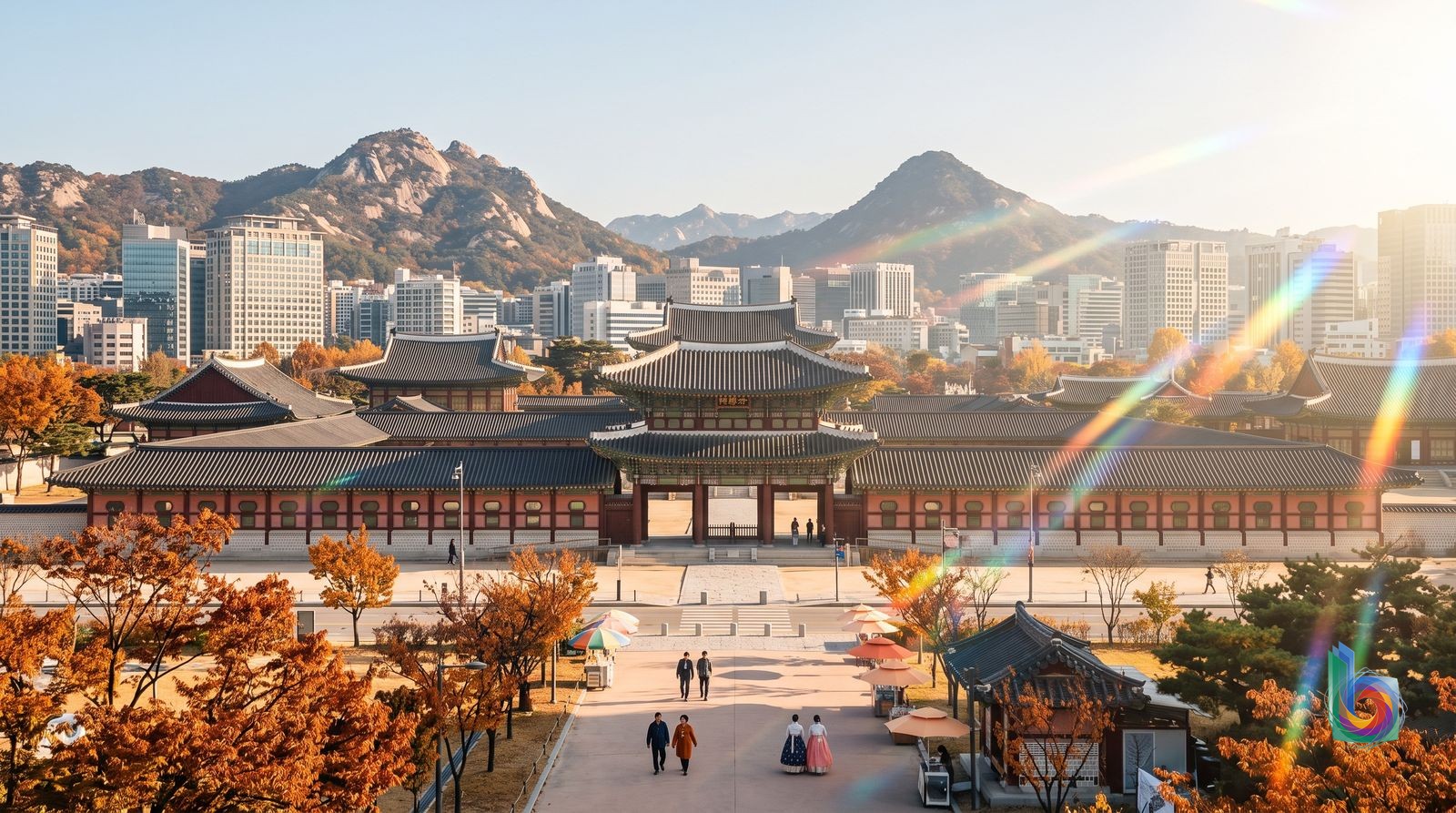
Seoul is South Korea’s vast, dense capital: a mountain-rimmed metropolis split by the Han River, where Joseon palaces, hanok lanes, Confucian sites and old markets sit alongside fashion, beauty, galleries, gaming, K-pop, nightlife and serious food. For travelers, its appeal is the friction between old royal Seoul and an aggressively current city—not a single landmark or a tidy historic center.
Known for
- Joseon-era palaces, hanok neighborhoods and the historic Jongno core
- Korean food, old-school soups, barbecue, markets and late-night dining
- K-pop, beauty, fashion, gaming and contemporary urban culture
- Nightlife and creative districts, especially Hongdae and Euljiro
- The Han River parks and city-edge hiking in Bukhansan
- Design, galleries, cafés and fast-changing neighborhoods such as Seongsu
Where to go
Jongno, Gyeongbokgung, Bukchon and Anguk
1Short stop · 1 day
Jongno, Gyeongbokgung, Bukchon and Anguk
The indispensable historical core: royal palaces, hanok lanes, temples and museums fit into a dense, walkable area. Give it a full day; Bukchon is best early, quietly, before the lanes become congested.
first-timersarchitecture lovershistory buffsfamilies
Explore Jongno, Gyeongbokgung, Bukchon and Anguk Insadong, Ikseon-dong and Jongmyo
2Insadong, Ikseon-dong and Jongmyo
Short stop · 0.5–1 days
This is old commercial Seoul at its most useful—tea, crafts, alley restaurants and hanok bars—rather than a standalone attraction. Skip the kitschiest stretches of Insadong’s main street and work it into a palace day.
foodiescraft shopperscafé lovers
Euljiro, Myeongdong and Namdaemun
3Euljiro, Myeongdong and Namdaemun
Short stop · 0.5–1 days
Central and practical by day, with market energy, department stores and old workshop alleys; Euljiro earns the visit after dark for its scruffy bars and restaurants. Myeongdong is efficient for beauty shopping and hotels, not an authentic neighborhood experience.
first-timersshopperslate-night eaters
Hongdae, Yeonnam-dong and Mangwon
4Hongdae, Yeonnam-dong and Mangwon
Short stop · 0.5–1 days
Seoul’s clearest concentration of youthful nightlife, live music, independent retail and casual eating. Use Yeonnam for calmer cafés and Mangwon for a more local-market feel; Hongdae itself gets loud and commercial on weekends.
nightlife seekerssolo travelersstudents
Yongsan, Itaewon and Hannam-dong
5Yongsan, Itaewon and Hannam-dong
Short stop · 0.5–1 days
Come for the National Museum of Korea, then stay for Seoul’s strongest international dining and a more cosmopolitan bar-and-gallery scene. It is hilly and fragmented, so treat it as a museum-plus-meal district rather than a polished sightseeing loop.
museum travelersLGBTQ+ travelersinternational food lovers
Seongsu-dong and Seoul Forest
6Seongsu-dong and Seoul Forest
Short stop · 1 day
Converted industrial streets packed with fashion pop-ups, warehouse cafés and Korean design retail, balanced by an easy park walk at Seoul Forest. Go on a weekday morning if you dislike queues and social-media crowds.
repeat visitorsfashion travelersdesign lovers
Gangnam, Apgujeong, Cheongdam and COEX
7Gangnam, Apgujeong, Cheongdam and COEX
Short stop · 1 day
The polished, corporate south is worth it for luxury shopping, K-beauty, Bongeunsa temple and the COEX complex—not for generic Gangnam Station crowds. It works best when you have a specific shopping, business or beauty reason to go.
business travelersluxury shoppersbeauty travelers
Jamsil and Songpa
8Jamsil and Songpa
Short stop · 1 day
A self-contained southeast day for Lotte World, Seoul Sky, Seokchon Lake and Olympic Park. It is a long trip from the palace districts, so choose it for family fun or skyline views, not out of obligation.
familiesskyline chaserstheme-park fans
Yeouido and the Han River parks
9Yeouido and the Han River parks
Short stop · 1 day
This is where to slow down with a riverside picnic, bike ride or convenience-store dinner at sunset. It is weather-dependent and busy on weekends, but more convincing as an evening reset than as an all-day sightseeing stop.
couplesfamiliesrunners
Bukhansan, Eunpyeong Hanok Village and Jingwansa
10Bukhansan, Eunpyeong Hanok Village and Jingwansa
Short stop · 1 day
A genuinely mountainous edge of the capital, with granite hiking, fortress walls, temples and a quieter hanok village. Bukhansan summit routes are steep and exposed; choose the gentler trails if you want scenery without a technical climb.
hikersactive travelersrepeat visitors
Don't miss
1
N Seoul TowerYongsan (용산)
The tower is Seoul's classic skyline orientation point, with the value mostly in the ride or walk up Namsan and the city spread beneath it. Go near sunset if you want the view to transition into night, but do not make the observatory your only Namsan experience.
2
Bukchon Hanok VillageJongno (종로)
Bukchon is the most accessible concentration of traditional hanok lanes between Seoul's royal palaces, with rooftops and alley views that explain the old city’s geography. Keep it to a focused walk and follow posted quiet hours and restricted routes, since it is an active residential neighborhood.
3
ChangdeokgungJongno (종로)
Often the most rewarding of Seoul's palaces, Changdeokgung retains an unusually graceful relationship between court buildings and wooded grounds. Book the Secret Garden tour if it is operating; that is the part that makes this more than a quick palace comparison.
4
Gyeongbokgung PalaceJongno (종로)
Seoul's grandest Joseon palace is the essential introduction to the royal capital, especially its broad ceremonial courtyards against the mountain backdrop. Time a visit around the guard-changing ceremony, then continue directly into the surrounding old-city neighborhoods.
5
Gwangjang MarketJongno (종로)
Gwangjang is the most useful first food-market stop in central Seoul: order a few small dishes, share, and keep moving rather than hunting for a single perfect stall. It is especially good for bindaetteok, mayak gimbap and noodles, with a fabric market around the food lanes.
6
Bukhansan National ParkNorth
Bukhansan delivers the rare Seoul combination of granite ridges, fortress walls and genuinely expansive views within reach of the city. It is the strongest choice for travelers who want a real half-day hike rather than a landscaped urban park.
Getting your bearings
Pins are the top attractions, ranked by the corner badge — click one for details.
The mental map
Think north of the Han for the old capital and most first-visit sights: Jongno, Insadong, Euljiro, Myeongdong and Hongdae. South of the river is newer, wealthier and more business-oriented—Gangnam, Apgujeong, Seongsu and Jamsil—while the river itself is for parks and evenings. Bukhansan and the northern mountain edge are a proper hiking day, not a quick urban detour.
When to go
Go in October for Seoul’s most reliable walking weather, clear skies and hiking conditions; late April to early May is beautiful but crowded and pricier around blossom season and public holidays. Summer is hot, humid and rain-prone—best handled with late starts, museums and Han River evenings—while winter rewards food, museums and lower hotel demand if you can handle bitter cold. Avoid treating the city as weather-proof: rain, fine dust, holiday closures and peak blossom weekends materially change the experience.
Pacing a visit
Use one hotel base; moving hotels to cover Gangnam or Jamsil wastes more time than it saves. A first visit needs 4–6 full days, or 7–8 if you want museums, hiking, nightlife and unhurried food exploration. Central districts are commonly 25–45 minutes apart, and cross-city journeys can take 60–90 minutes in busy periods, so do not stack far-flung neighborhoods into one day.
Book before you land
Bukhansan Dulle-gil Uiryeong-gil trail reservation: required at least one day ahead; bring ID to the trailhead. · Changdeokgung Secret Garden guided entry, especially for an English-language slot in spring or autumn and on weekends.
Getting in
ICNIncheon International Airport
The main international gateway, about 45–70 minutes from central Seoul by AREX train, airport limousine bus or taxi depending on the hotel district and traffic. Use it for almost all long-haul arrivals.
Flights and transfers into IncheonGMPGimpo International Airport
The convenient city airport for domestic flights and selected regional routes, especially from Japan, China and Jeju. It is much closer to central Seoul than Incheon and connects directly to the metro.
Flights and transfers into SeoulSeoul Station
The practical rail gateway for KTX arrivals from Busan, Gyeongju via Singyeongju, Daegu and other Korean cities. It is central, linked to multiple metro lines, and also the AREX endpoint from Incheon.
Flights and transfers into Seoul
Before you go
Questions worth settling
How many days should I spend in Seoul on a first visit?
Plan 4–6 full days for the essentials, including the Jongno palace area, markets and food, a nightlife or café district, and time by the Han River. Stay 7–8 days if you also want museums, Bukhansan hiking, nightlife and slower food exploration.
Where should I stay in Seoul for a first trip?
Use one central hotel base rather than changing hotels. Jongno, Insadong, Euljiro or Myeongdong are most practical for first-time sightseeing; choose Hongdae for nightlife and cafés, while Gangnam or Jamsil make sense mainly if shopping, business, COEX or Lotte World are priorities.
Which Seoul neighborhoods should I combine in one day?
Pair Jongno, Gyeongbokgung, Bukchon and Anguk with Insadong, Ikseon-dong and Jongmyo for a full historic-core day. Keep Hongdae, Yeonnam-dong and Mangwon together, and treat Jamsil and Songpa, Gangnam and COEX, or Bukhansan as separate geographic days rather than adding them to palace sightseeing.
Do I need a visa or K-ETA for South Korea?
It depends heavily on your passport: many visitors can enter visa-free for short tourism, while others need a visa or K-ETA/advance authorization. Check the official Korea Visa Portal and your embassy before booking, since K-ETA exemptions and requirements can change.
Is Seoul easy to get around without a car?
Yes—the metro is the default for almost everything, and a T-money card makes metro and bus transfers easy. Still, Seoul is huge: central districts can be 25–45 minutes apart and busy cross-city trips 60–90 minutes, so use taxis for late nights, luggage or awkward mountain-edge connections.
When is the best time to visit Seoul?
October is the strongest all-round choice for clear skies, comfortable walking and Bukhansan hiking. Late April to early May is beautiful for blossoms but crowded and in high demand; summer is hot, humid and rain-prone, while winter suits museums, shopping and eating if you can handle bitter cold.
What should I book ahead in Seoul?
Reserve a Bukhansan Dulle-gil Uiryeong-gil trail slot at least one day ahead and bring ID to the trailhead. Book Changdeokgung Secret Garden guided entry in advance—especially English-language slots in spring or autumn and on weekends—and secure domestic transport early if traveling around Chuseok or Seollal.
Known for
- Joseon-era palaces, hanok neighborhoods and the historic Jongno core
- Korean food, old-school soups, barbecue, markets and late-night dining
- K-pop, beauty, fashion, gaming and contemporary urban culture
- Nightlife and creative districts, especially Hongdae and Euljiro
- The Han River parks and city-edge hiking in Bukhansan
- Design, galleries, cafés and fast-changing neighborhoods such as Seongsu
