Season by season
January–February
Mild by national standards, but this is San Diego’s cooler, more unsettled stretch. Coastal fog is common and rain is most plausible in winter; evenings need a real layer.
Not reliable beach-swimming weather, shorter daylight, and occasional rainy spells can disrupt outdoor plans.
March–April
Spring brings pleasant temperatures and greener landscapes, but March and April can be windy. Coastal fog remains common, especially in the morning.
Bring layers and do not count on uninterrupted beach weather; wind can make exposed coastal walks less appealing.
May–June
Inland areas can be warm, while the coast often sits under ‘May Gray’ and ‘June Gloom’: low cloud or marine layer that may linger well into the day.
This is a poor choice for travelers expecting postcard-blue beach days every day. Del Mar’s county fair, roughly June to early July, pushes up North County traffic and hotel demand.
July–August
Lively, dry summer weather, long days and busy beaches. This is prime family-vacation season, with warm conditions and the year’s biggest crowds at major attractions.
Higher hotel rates, crowded beaches, traffic and advance-booking pressure at family attractions. Late summer can also bring abrupt dry heat and fire-weather conditions when Santa Ana winds develop.
September–October
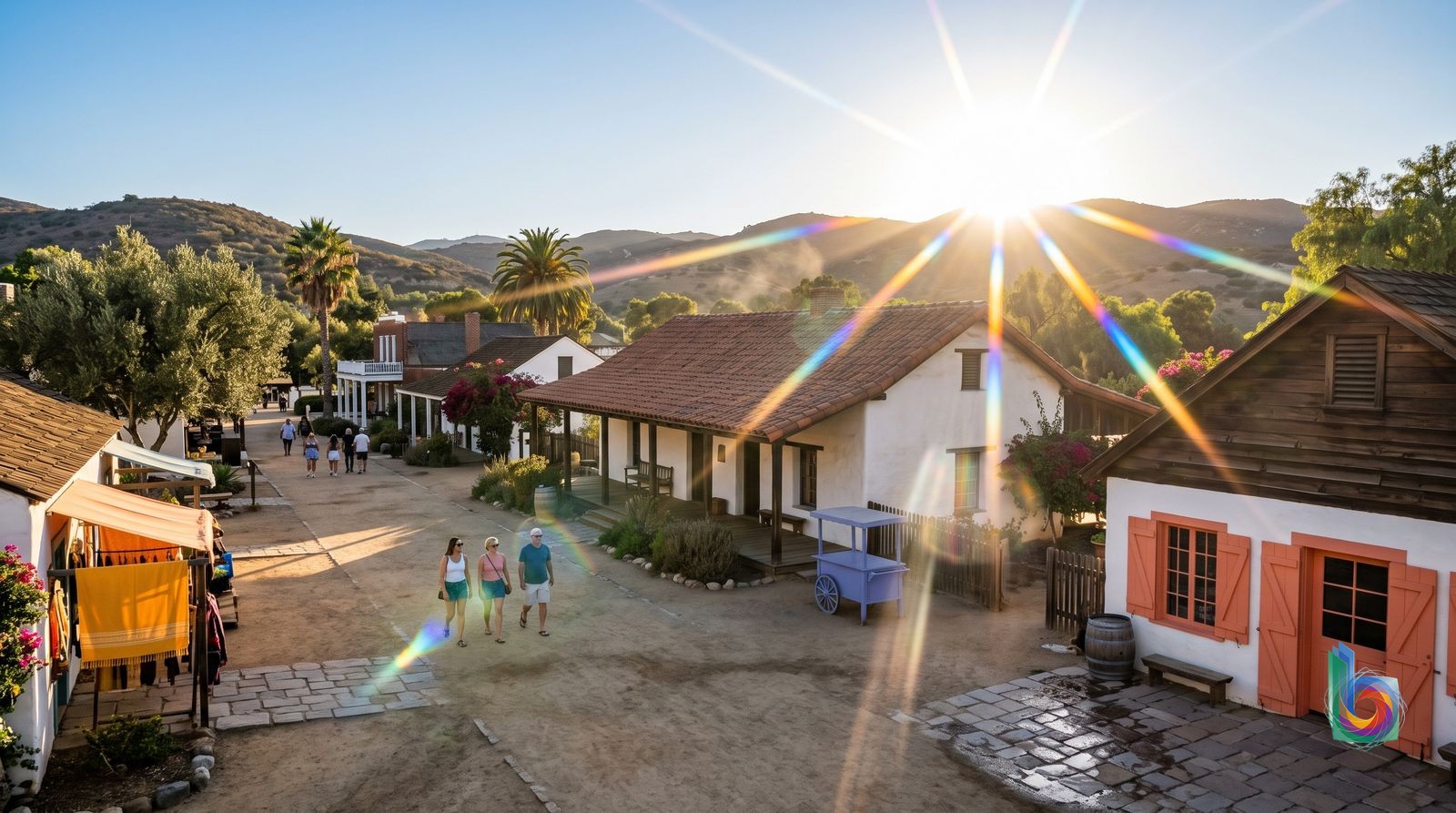
The strongest all-round window: generally San Diego’s warmest, clearest beach weather, with September typically the hottest month and summer crowds beginning to ease. Coastal fog can still occur, particularly in the mornings.
It is still popular and not cheap, particularly on weekends. Santa Ana winds can bring sudden heat, poor air quality and elevated fire risk in late summer and fall.
November–December
Comfortably mild much of the time, with quieter beaches and a more local feel. Coastal fog remains possible, and winter rain becomes increasingly possible later in the period.
Water and evening temperatures are cool, daylight is shorter, and holiday dates can raise prices and crowds.
Events worth planning around
San Diego County Fair · Usually June to early July
Held at the Del Mar Fairgrounds. It materially increases North County traffic, crowds and hotel demand; avoid basing yourself around Del Mar then unless the fair is part of the trip.
Del Mar Thoroughbred Club racing seasons · Summer season usually runs from late July into September; a shorter fall season is typically held later in the year
Race days put substantial pressure on Del Mar-area roads, restaurants and hotels. Reserve North County lodging early or stay elsewhere if racing is not your priority.
San Diego Comic-Con International · Usually July
The convention fills Downtown hotels, raises rates across the city and makes the Gaslamp, Convention Center area and central transit notably congested. Book far ahead or avoid Downtown during the event.
Getting around
Walking
Exploring one compact pocket at a time: Little Italy, the Gaslamp and waterfront, Old Town’s historic core, Coronado village, La Jolla Village/Cove, or the beach-and-boardwalk stretches of Pacific and Mission Beach.
Plan days by district rather than trying to walk between headline sights. Balboa Park’s zoo and museums are walkable once there, but allow more time than the map suggests; Coronado’s beach and Orange Avenue are an easy on-foot pairing.
Walking stops being practical between districts. Balboa Park and Hillcrest have no trolley and the park is large; La Jolla Village is hilly and separate from UC San Diego; Mission Bay, Point Loma and Mission Valley are spread across wide roads. Avoid isolated streets and the area near or under the Coronado Bridge in Barrio Logan late at night.
MTS Trolley
The best car-free connector when your plan matches the rails: Downtown/Gaslamp, Little Italy-adjacent central stops, Old Town, Mission Valley, UC San Diego/UTC, Barrio Logan, and San Ysidro for the Tijuana pedestrian crossing. The Blue Line is the straightforward Downtown–San Ysidro option.
Use it as a corridor service, not as a citywide metro. Old Town Transit Center is especially useful, with Blue and Green Line access plus Amtrak and COASTER connections. From Downtown, allow about 45 minutes on the Blue Line to San Ysidro before border time.
There is no trolley through Balboa Park, Hillcrest, North Park, South Park, Coronado, Point Loma, Ocean Beach, Pacific Beach or Mission Beach. The Blue Line reaches UC San Diego and UTC, not La Jolla Village or La Jolla Cove; continue by bus or rideshare.
Bus
Filling the gaps from trolley or rail stops to Hillcrest, Balboa Park, La Jolla, and the beach neighborhoods—particularly if you are staying car-free and can tolerate a slower pace.
Treat buses as a single-district tool: use one to reach a neighborhood, then walk its core. They are the public-transport link for Pacific Beach, Mission Beach, Ocean Beach, Point Loma and Coronado, where the trolley does not go.
Cross-town and beach-to-beach journeys are often slow and indirect, and late-night service is not a dependable substitute for a car or rideshare. Buses do not make Pacific Beach, Mission Beach, Ocean Beach or Point Loma feel close to Downtown; North Park and South Park also require patience with buses or rideshares.
Rideshare or taxi
Cross-town jumps, airport-to-beach hotels, a multi-stop Balboa Park/Hillcrest day, and getting home after nightlife. It is the sensible occasional splurge for La Jolla, Point Loma, Ocean Beach, Pacific Beach and Mission Beach when transit would consume too much of the day.
Use Uber/Lyft selectively rather than for every journey: pair it with walking and the trolley in Downtown, Old Town and Mission Valley. From SAN, it is usually the better choice than transit for beach or La Jolla lodging.
Fares rise with traffic, events and late nights. Beach and event-area pickup can be slow, while a string of rides quickly costs more than a rental car; the Gaslamp, Petco Park and summer beach zones are the obvious pinch points.
Rental car
A Safari Park day, Torrey Pines, Julian, Temecula, or an itinerary hopping between beaches, La Jolla, Point Loma and inland neighborhoods. It is also worthwhile for families carrying beach gear or travelers staying outside the rail corridors.
Reserve it for the days it genuinely expands your range, or keep it for a car-based stay in Mission Valley, La Jolla, Mission Bay or Point Loma. The Safari Park is best treated as a full-day, car-oriented outing.
It is more liability than asset for a Downtown-only, Little Italy or Gaslamp stay: parking is expensive, traffic is real, and beach parking is a contest. Mission Beach’s narrow peninsula, Pacific Beach, La Jolla and Coronado can be particularly frustrating; never leave luggage or beach gear visible in the car.
Ferry
A scenic, traffic-free link between Downtown and Coronado when you are spending time in both rather than trying to cover the whole city.
Take the passenger ferry to reach Coronado’s village, then walk Orange Avenue and the beach area or use a local bus/rideshare for farther points.
It is not late-night transport on demand: the return depends on the ferry schedule, bus, rideshare or driving. Coronado has no trolley, and a ferry arrival does not solve access to the rest of San Diego.
Safety: Use normal city caution: swim only near lifeguards and heed rip-current flags, keep valuables out of parked cars, and avoid isolated streets or the Coronado Bridge/Barrio Logan–Southeast San Diego area late at night.
Book before you land
San Diego Zoo Safari Park — book admission online for a fixed busy weekend/holiday date, but the things that genuinely run out are limited-capacity safari and animal experiences; reserve those several weeks ahead, especially in summer. · San Diego Zoo — ordinary admission is usually easier than its sister park, but reserve online for peak weekends and school holidays; book any premium tour or animal encounter well ahead rather than assuming it can be added on the day. · Petco Park Padres games — buy ahead for Dodgers, Giants, opening-weekend, playoff-contending, and promotional games; ordinary midweek games are rarely a reason to lock yourself into a nonrefundable plan months out. · LEGOLAND California — outside the city in Carlsbad, but a common family day trip. Reserve dated entry ahead for weekends, school breaks and summer; do not sacrifice a San Diego day to it unless it is a priority for your group.
- The useful free San Diego is outdoors: walk the Balboa Park gardens and Spanish Revival architecture, the Embarcadero waterfront, La Jolla Cove and coastal bluffs, Sunset Cliffs, or the Mission/Pacific Beach boardwalk. Timken Museum of Art is free; Balboa Park itself is free, but most of its museums are not. Check individual museums’ free-day rules carefully—many are aimed at local residents, not visitors.
- Beach conditions are not decorative information. Rip currents can be strong and sudden; swim near a lifeguard, respect posted flags, and do not assume calm-looking water is safe. Coastal evenings can feel surprisingly cold even after a hot inland day, so carry a layer.
- Use normal city caution rather than paranoia. Property crime is the more likely problem: do not leave luggage, beach gear or shopping visible in a parked car. Avoid isolated streets, dark alleys, and the area around/under the Coronado Bridge in Barrio Logan or Southeast San Diego late at night.
- Spanish is widely spoken and bilingual service is common. Tipping remains expected in sit-down restaurants and bars; card payments are easy, but keep a small amount of cash for incidental situations. California sales tax is added at checkout, so menu and shelf prices are not the final total.
- For a true day trip, Tijuana is the one that can justify losing a San Diego day—if you actually want Mexico, not merely a border photo. Take the Blue Line from Downtown to San Ysidro in about 45 minutes, walk across, and allow generous extra time for the return border queue; do not drive a rental car into Mexico without Mexican insurance. Tecate is lower-key and often has a shorter pedestrian return line, but requires about an hour’s drive each way.
- Do not treat every nearby destination as a day trip you ‘should’ take. The Safari Park needs a full day and is best with a car; Julian and Temecula are each roughly an hour’s drive before traffic and stops, so choose them only for mountain scenery/pie or wine tasting. For most first visits, another day in Balboa Park, the coast, Coronado or Point Loma is the better trade.
Worth leaving the city for
Tijuana, MexicoFull day — about 45 minutes by Blue Line from downtown to San Ysidro, plus border time in both directions.
This is the one border-city excursion that delivers a genuinely different country, not another San Diego beach neighborhood: Mexican food, markets and the bustle around Avenida Revolución. Go on foot via the Blue Line to San Ysidro; driving adds insurance requirements and can mean a punishing wait back into the U.S. Bring the documents needed to re-enter the U.S. and do not treat it as a late-night party mission.
San Diego Zoo Safari Park, San Pasqual ValleyFull day — roughly 45–60 minutes each way by car from downtown, longer in traffic.
If wildlife is a priority, the Safari Park’s huge savanna-style habitats are a stronger change of scene than squeezing another Balboa Park museum into the itinerary. It is not a quick add-on to the San Diego Zoo: it needs its own day and is best with a car.
Julian and Cuyamaca Rancho State ParkFull day — around 1.5 hours each way by car from downtown.
Go for a sharp landscape reset: mountain roads, oak-and-pine country and hiking rather than coast-and-city scenery. Julian itself is small and touristy, so pair it with Cuyamaca rather than making the town alone the objective. Note the counterintuitive summer downside: these mountains can be hotter than the coast.
Tecate, MexicoFull day — about 60 minutes by car to the U.S. side of the crossing from San Diego, plus border time.
A quieter, more human-scale border-town alternative to Tijuana: cross on foot, walk to the town square and have lunch. It is worth the longer drive only for travelers who want low-key Mexico rather than Tijuana’s urban energy; the pedestrian return line is often shorter, but never guaranteed.
Temecula Valley Wine CountryFull day — about 60 minutes each way by car from San Diego, longer on I-15 in traffic.
For a group that wants a winery day, Temecula is a better use of a spare day than trying to manufacture wine-country atmosphere inside San Diego. Around 30 wineries and tasting rooms cluster close together; it is car-dependent, so assign a driver or book transport. It is not a compelling substitute for the coast or Balboa Park on a first, short visit.