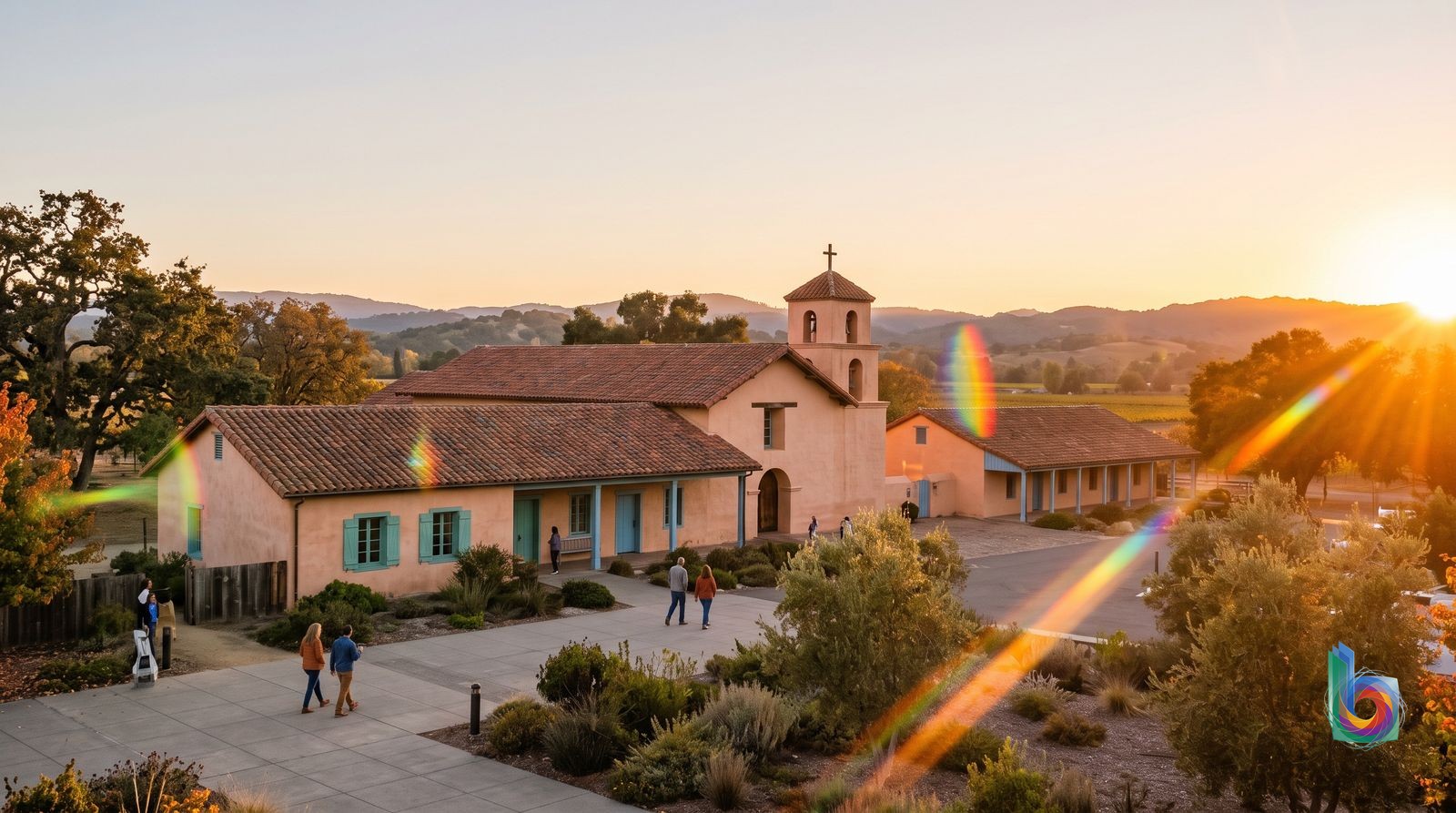
Season by season
January–March
The quietest, often best-value stretch. Expect cool temperatures, rain and shorter days; outdoor walks and rural winery drives are less dependable, but the Plaza’s historic sights and indoor tastings work well between storms.
Wet weather can disrupt outdoor plans, and March becomes markedly busier during the Sonoma International Film Festival.
April–June
One of Sonoma’s two best overall windows: the landscape is still green, weather is generally usable, and winery activity is lively without autumn’s full harvest crush. Tuesday Night Market begins in May.
Weekends still reward advance tasting and restaurant reservations; the market makes Tuesday evenings around City Hall busier and parking less pleasant.
July–August
Dry, sunny and busy, with genuinely hot inland afternoons. This is easy weather for a Plaza stroll early or late in the day, but winery days require heat planning and a sober-driver plan.
Higher demand, hot afternoons and holiday-weekend pressure. July 4 in particular crowds the small center and requires early lodging planning.
September–October
The other prime window, with harvest energy, active wineries and generally excellent early-fall weather. September’s Valley of the Moon Vintage Festival adds a concentrated burst of activity.
This is the most reservation-sensitive period: harvest weekends bring higher lodging prices, more traffic and pressure on tastings, transport and restaurants.
November–December
A quieter shoulder into winter, with cooler temperatures, increasing rain risk and short daylight. It can be a good value-minded choice for the Plaza, meals and deliberately paced tastings.
Weather is less reliable for outdoor plans and vineyard scenery is less consistently green or harvest-active than in spring and early fall.
Events worth planning around
Sonoma International Film Festival · Usually March
Festival screenings, special events and the associated visitor surge fill lodging and increase demand around the Plaza. Book screenings and accommodation early if traveling that weekend.
Tuesday Night Market · May–October, Tuesdays, 5:30 p.m. to dusk
A worthwhile free local-social evening around City Hall, but it makes the Plaza busier and parking less pleasant. Plan dinner and parking accordingly.
July 4 Parade and Fireworks · July 4
The small town center becomes notably crowded; secure lodging well ahead and expect more difficult parking and local traffic.
Valley of the Moon Vintage Festival · Usually September
The festival noticeably crowds Sonoma’s center during an already high-demand harvest period. Reserve lodging, tastings, transport and restaurant tables well in advance.
Getting around
Walking
Sonoma Plaza, the Mission/Barracks/Bear Flag history cluster, tasting rooms and dinner. Nearer Eastside blocks can also work well for a quieter stay within reach of the Square.
Treat the Plaza—also called the Square—as your pedestrian base. A realistic on-foot day is the historic sites, a meal, one or two tastings and a circuit of the Plaza; use a self-guided walking tour if you want structure.
Walking stops being convenient quickly west along West Napa Street and from much of North Broadway’s resort corridor. The hills and parkland north of town are not a casual stroll, and the Springs, El Verano, Glen Ellen and Kenwood are not walkable extensions of the Plaza. Verify a hotel's actual distance rather than trusting a “Sonoma” address.
Rental car with a designated sober driver
The sensible default for winery appointments, Glen Ellen, Jack London State Historic Park, Petaluma, Napa and any stay in the Springs, El Verano, Glen Ellen or Kenwood.
Rent a car if wine country is the point of the trip, then nominate a sober driver for tasting days. It gives you the flexibility Sonoma County Transit does not: rural winery access, changed reservations and an easy return to lodging after dark.
Do not turn the driver into a drinker. Rural roads, heat and repeated pours are a poor combination; a car is useful only if someone remains sober. Traffic and parking are also less pleasant around the Plaza on summer weekends, Tuesday Night Market evenings and major festival dates.
Prebooked wine driver, private transfer or guided winery tour
Any tasting-heavy day when everyone wants to drink, especially for rural wineries and the quieter valley bases of Glen Ellen and Kenwood.
Reserve the driver or tour before booking tightly timed tastings, particularly Friday through Sunday, during harvest and on holiday weekends. Give the operator your winery appointments and allow time between them; limited transport capacity is more likely to sell out than Sonoma’s historic sights.
It costs more than self-driving and reduces spontaneous detours. Still, it is far more dependable than trying to find an on-demand ride from a rural winery or after a late tasting.
Bicycle
Confident riders who want a slower, active way to explore the flatter roads immediately around Sonoma town or connect a small number of carefully chosen nearby stops.
Use a bike for a modest, preplanned route rather than an ambitious winery crawl. Start from the Plaza or Eastside, ride in daylight, carry water and arrange a non-riding return if tastings are involved.
This is not an easy universal solution: hills and parkland north of town, heat, rural-road conditions and the spread-out Springs/El Verano corridor make cycling less appealing. It is especially unsuitable as a substitute for a sober-driver plan after wine tasting.
Sonoma County Transit bus
Occasional point-to-point travel between Sonoma and other valley communities when your schedule is flexible and you are not trying to visit multiple wineries.
Check the current timetable closely and build the day around a single practical connection. It can link surrounding towns, but think of it as basic local transport, not a sightseeing service.
Service is too limited for carefree winery-hopping, and it does not solve the last-mile gap to many vineyards. It works particularly poorly for late-night returns, rural Kenwood and Glen Ellen itineraries, and the spread-out Springs and El Verano corridor. There is no passenger rail connection.
Rideshare or taxi
A one-way dinner ride, a backup between a Plaza hotel and a nearby address, or airport transfers when you have transport for winery days already arranged.
Book ahead where possible, especially after dinner or during busy weekends. If staying around the Plaza, it can be useful for avoiding a short drive after drinks—but confirm the return plan before leaving town.
Availability thins outside Sonoma proper and after tastings. Do not assume you can summon a car from a rural winery, Glen Ellen, Kenwood or late at night; this is a backup, not a dependable winery-day strategy.
Safety: For winery days, prearrange a sober driver or transport: rural roads, heat and repeated tastings make driving risky, and rideshares can be scarce outside Sonoma after dark.
Book before you land
There is no major Sonoma monument that routinely demands months-ahead admission: the Mission, Barracks and Vallejo sites around the Plaza are small historic-site visits, not a big-ticket sellout circuit. · Book winery tastings and seated experiences ahead for Friday–Sunday, harvest season and holiday weekends—especially if you need a specific time, group size, or driver itinerary. Do not build a day around walk-ins. · Reserve guided wine/food/history tours and winery transport in advance in peak periods; their limited group sizes, rather than the town’s historic sights, are what sell out. · Book Sonoma International Film Festival screenings, special events and lodging early if traveling during the March festival weekend. Likewise, secure lodging well ahead for July 4 and the Vintage Festival weekend.】【。
- Sonoma is Wine Country, but it is also a real town of roughly 10,000 people with Latino and Nepalese communities—not an outdoor tasting room. Keep winery behavior and noise respectful once you leave the Plaza.
- Tasting and restaurant reservations matter more than attraction tickets. Confirm whether a winery requires an appointment before driving there; many do.
- Use a sober driver or hired transport for winery days. Rural roads, heat and repeated small pours are a bad combination; do not count on rideshare as your exit plan.
- The Plaza is unusually picnic-friendly: alcohol is permitted there from dawn to dusk. Keep it low-key, clean up after yourself, and check any event-specific restrictions.
- Tuesday Night Market runs May through October, 5:30 p.m. to dusk, around City Hall; it is the best free local-social evening, but it also makes the Plaza busier and parking less pleasant.
- The genuinely free core is strong: the Plaza, Bear Flag monument, exterior historic streets, Sonoma Garden Park, Friday’s year-round farmers market browsing, and the Tuesday market. Do not confuse ‘Wine Country’ with free wine—tastings are commonly paid and increasingly reservation-based.
Worth leaving the city for
Glen Ellen and Jack London State Historic ParkHalf day; roughly 20–30 minutes each way by car from Sonoma, plus time for trails and the historic site.
This is the best escape if Sonoma’s tasting rooms and Plaza history have started to feel overly curated. Glen Ellen is a genuinely small village, and Jack London State Historic Park adds the literary history and proper walking country that Sonoma itself lacks. It is close enough to combine with an unhurried lunch rather than turn into a logistics project.
PetalumaHalf day to a relaxed full day; about 30–40 minutes each way by car, traffic permitting.
Go west for a real change of scene: a historic riverfront downtown, independent shops and an artsier, less wine-tour-driven atmosphere. It is a better use of a spare day than trying to stretch Sonoma Plaza into a second full day. The drawback is that it is not a vineyard experience—go for the town, food and wandering.
NapaFull day; typically 30–45 minutes each way by car, longer in weekend or holiday traffic.
Napa is the obvious comparison trip, and it earns the detour if you want the region’s more polished restaurant and winery ecosystem. Sonoma is more casual and generally less ritzy; Napa is where to go when a serious meal or marquee wine-country experience matters more than local texture. Do not go merely to collect another tasting room—Sonoma already does that well.
Sonoma Coast (Bodega Bay/Bodega Head)Full day; allow roughly 1.5–2 hours each way by car, depending on the coastal destination and traffic.
Wine country can feel relentlessly inland and indulgent; the Pacific is the cleanest reset. Bodega Bay and Bodega Head deliver wind, big-water views and coastal walking—scenery Sonoma town cannot duplicate. This is worth it only with a car and decent weather; fog, wind and slow two-lane roads are part of the deal, not a malfunction.