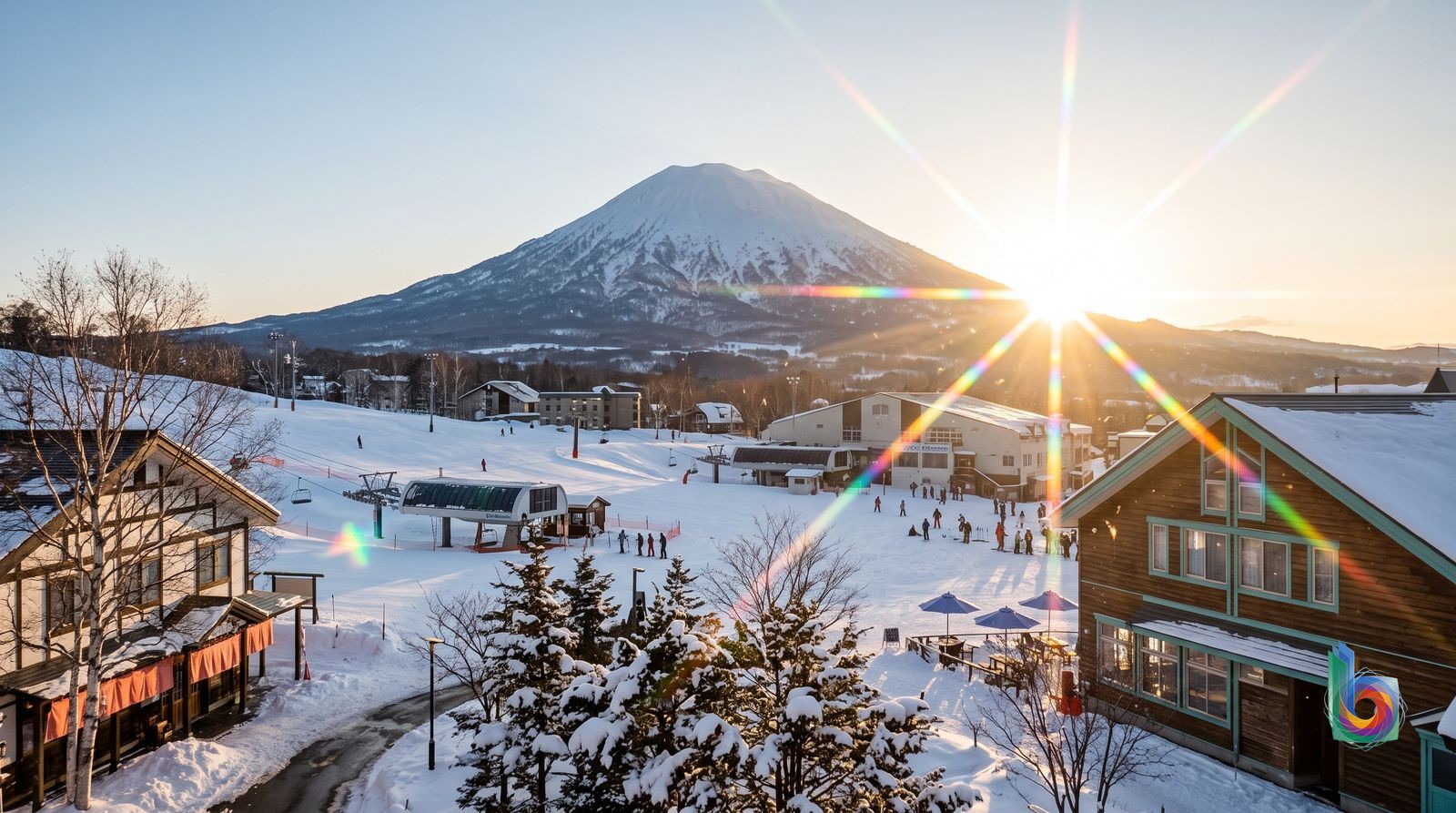
Season by season
December 1–19
Early winter: snow coverage and lift/terrain openings can still be incomplete, and weather can close exposed lifts. It is quieter than the holiday rush but not a safe choice for a full-mountain powder itinerary.
You may get fresh snow, but there is a real risk of limited terrain, variable base depth and weather-related closures.
December 20–February 28/29
The core Niseko season: the strongest chance of deep, light powder, but also the busiest and most expensive part of the year. Wind, heavy snow and poor visibility can still shut upper lifts and slow road transfers.
Christmas–New Year, Lunar New Year and Australian school-holiday weeks bring expensive accommodation, booked-out lessons and rentals, crowded restaurants, scarce taxis and coach reservations that need to be made early.
March 1–31
A strong compromise month for skiing: longer daylight and generally less pressure than peak winter. Snow quality becomes more variable as temperatures rise, particularly later in the month.
It is no longer dependable midwinter powder every day; expect a mix of winter snow, spring conditions and occasional closures.
April 1–May 31
Spring wind-down. Early April can still offer skiing, but terrain and lift availability may be reduced; after the ski operations end, snow is no longer the reason to come. The landscape transitions through thaw and mud before the green season.
Do not assume full resort operations in April, and May is an awkward shoulder period for both snow sports and established summer hiking.
June 1–August 31
The quiet counter-season, with green hills, hiking, cycling and clear Mount Yotei views as the main draw. A car is particularly useful because the resort bases and trailheads are spread out.
This is not a compact, transit-friendly summer destination: services are more dispersed, and the resort’s winter energy largely disappears.
September 1–November 30
Brief autumn followed by the approach of winter. Autumn color can be attractive, but weather is unsettled and high ground may close or become unsuitable as conditions deteriorate.
It is a short and weather-dependent season. Do not build a trip around high-elevation access, and late autumn is too early for dependable skiing.
Events worth planning around
Christmas–New Year holiday period · Usually late December through the first days of January
One of Niseko’s busiest and priciest windows. Reserve slopeside accommodation, New Chitose Airport coaches, rentals, lessons, restaurant tables and taxis well ahead; allow extra time for snowy road transfers.
Lunar New Year · Usually January or February; dates vary annually
A major peak-demand period for the resort. Expect higher accommodation prices and pressure on airport coaches, ski school, equipment rental, dining and taxis.
Australian school holidays · The late-December to January holiday period is the most consequential overlap with Niseko’s winter season; exact dates vary by state and year
Adds materially to peak-season demand, especially in Hirafu. Book accommodation and ski logistics early rather than assuming Niseko has spare capacity outside Japanese holiday dates.
Getting around
Walking
Hirafu Middle Village, where Grand Hirafu lifts, rentals, restaurants and bars cluster closely enough for a car-free ski holiday.
Stay central and walk the short resort-core trips; Upper Hirafu is walkable downhill into the village and to the lifts.
Niseko is a region, not a walkable town. Do not plan to walk between Hirafu, Hanazono, Niseko Village or Annupuri—especially in snow or darkness. Hills and ice make Upper Hirafu’s return uphill, and many addresses in Lower Hirafu and Izumikyo, much harder than maps suggest.
Niseko United Shuttle
Winter travel between the four Niseko United bases: Annupuri, Niseko Village, Hirafu and Hanazono, particularly for non-drivers.
Use the seasonal inter-resort shuttle, generally running about every 40–60 minutes. It takes roughly an hour end to end from Annupuri to Hanazono and is included with an All-Mountain day or season pass; otherwise, pay a fare.
It is a winter, timetable-led service—not a city bus network. It does not serve Moiwa, and it is too slow to treat distant bases as casually interchangeable; Annupuri and Hanazono are the awkward ends of the route.
Ski lifts and on-mountain traverses
Skiers and snowboarders moving between the Niseko United areas during the day; it can be quicker than the road shuttle.
Traverse via the upper mountain only when the relevant lifts and gates are operating, and carry the appropriate Niseko United lift pass.
Wind closures are routine on the upper mountain. Do not make a dinner reservation or airport-bound plan that depends on skiing back from Hanazono, Annupuri or Niseko Village; the inter-area connection can disappear with the weather.
Taxi or pre-arranged accommodation transfer
Luggage, dinner reservations, early airport departures, bad-weather nights, and properties in Lower Hirafu, Izumikyo, Moiwa or outlying parts of the resort.
Reserve ahead in peak winter—ask your hotel or chalet manager to arrange it if possible. Use taxis for the roughly 20-minute Kutchan Station–Grand Hirafu transfer as well.
Cars are limited when everyone wants one: snowy dinner evenings, peak holiday weeks and early departures are the danger periods. App-based rideshare is not a dependable backup, and a late-night return from Hirafu to Kutchan is not as effortless as it looks.
Rental car
Summer hiking, cycling and rural day trips; also useful for groups staying in Izumikyo, Moiwa, Niseko Town or other addresses away from shuttle stops.
Rent for a countryside-focused trip and confirm parking at your accommodation. It makes the gaps between the resort bases and Niseko Town far more manageable.
For a January ski holiday, it is only a good idea for drivers genuinely comfortable with snow, ice and whiteouts. Winter roads, parking and storm conditions can make a car more stressful and expensive than shuttles and taxis; it does not solve Hirafu’s peak-time congestion.
Safety: Stay within marked terrain and obey closures: Niseko’s wind, deep snow and flat light can change fast, so book a qualified guide and carry proper avalanche gear for any backcountry plan.
Book before you land
No conventional Niseko attraction is a must-book museum-style ticket. The scarce items are winter logistics: reserve the New Chitose Airport–Niseko coach before arrival, especially over Christmas–New Year and Lunar New Year. · Buy Niseko United lift passes online ahead if the current season offers advance sales, but do not treat them as an attraction that invariably sells out. What does sell out first is slopeside accommodation, ski/snowboard rental and lessons in peak weeks; book those weeks to months ahead. · If you intend to use a specific onsen, guided backcountry/snowshoe outing, or a resort restaurant, check that operator’s booking rules and reserve for peak winter. Conditions and hours are seasonal, so do not rely on a generic Japan booking list.】【”】【
- Use the name precisely: “Niseko” can mean Niseko Town, the broader Annupuri resort region, or Niseko United. Hirafu is the busy international base; Kutchan is the practical service town. Confirm the actual property and lift base before booking anything.
- Carry some yen. Cards are common in resort hotels and larger businesses, but rural buses, small businesses and some taxis are less reliably card-friendly. Keep cash for fares and incidentals.
- Onsen etiquette is non-negotiable: wash fully before entering, do not take a towel into the bath, and check each facility’s tattoo policy before turning up. Many are gender-separated and nudity is normal.
- Do not duck ropes, gates or closures for ‘Niseko powder.’ Snow, wind and visibility change quickly; backcountry terrain requires avalanche judgment, appropriate equipment and ideally a qualified guide. The fact that the in-bounds runs are accessible does not make off-piste terrain benign.
- Make dinner reservations in peak winter. Hirafu has more choice than the other bases, but its popular restaurants and taxis can be fully committed on snowy evenings.
- Dress for the transfer as well as the ski day: airport coaches can be delayed by winter roads, and walking even a short distance with luggage in a storm is miserable. Build slack into arrival and departure days.
Worth leaving the city for
OtaruFull day — allow roughly 5–6 hours door-to-door return from Hirafu/Kutchan by rail and local transfers; faster by car in clear conditions.
The best change-of-scene day: a real historic port town with canal-side warehouses, seafood and an urban stroll that Niseko’s purpose-built resort villages cannot provide. Go if you need streets, shops and food rather than another mountain day. It is especially useful in winter when you want a bad-weather alternative, though snow can make the journey slow.
Lake Toya and Mount UsuFull day — realistically 6–8 hours door-to-door return from Hirafu, longer in winter or on snowy roads.
This is the proper volcanic counterpoint to Niseko: a broad caldera lake, views of Mount Yotei en route, and the active Usu volcanic landscape. It beats staying local if you have a car or are joining a sightseeing tour; it does not make sense as an improvised public-transport outing from Hirafu.
Yoichi (optionally paired with Otaru)Full day when combined with Otaru — allow about 6–8 hours door-to-door from Hirafu/Kutchan.
Go for the coastal setting, fruit-country character in season and the Nikka whisky distillery if you have secured a visit. On its own Yoichi is a modest stop, so pair it with Otaru rather than sacrificing a powder day merely to tick it off. Distillery access can require advance booking; do not assume a walk-in tour.
Shakotan PeninsulaFull day — around 7–9 hours door-to-door from Hirafu by car, depending on which coastal stops you make.
Worth leaving Niseko for in summer and early autumn, when the dramatic coast and clear blue water are the point. It is a scenery-and-road-trip day, not a practical winter excursion: weather, short daylight and road conditions can erase the payoff.
SapporoFull day — roughly 7–9 hours door-to-door return from Hirafu, depending on transfer method and conditions.
Choose Sapporo only when you actively want Hokkaido’s big-city reset: serious dining, shopping, museums and a much broader evening scene than Niseko. It is not a casual side trip; the transit and winter-road time makes it a long day, and an overnight is better if you want nightlife.